

Blood Testing Explained
What Can a Blood Test Check For?
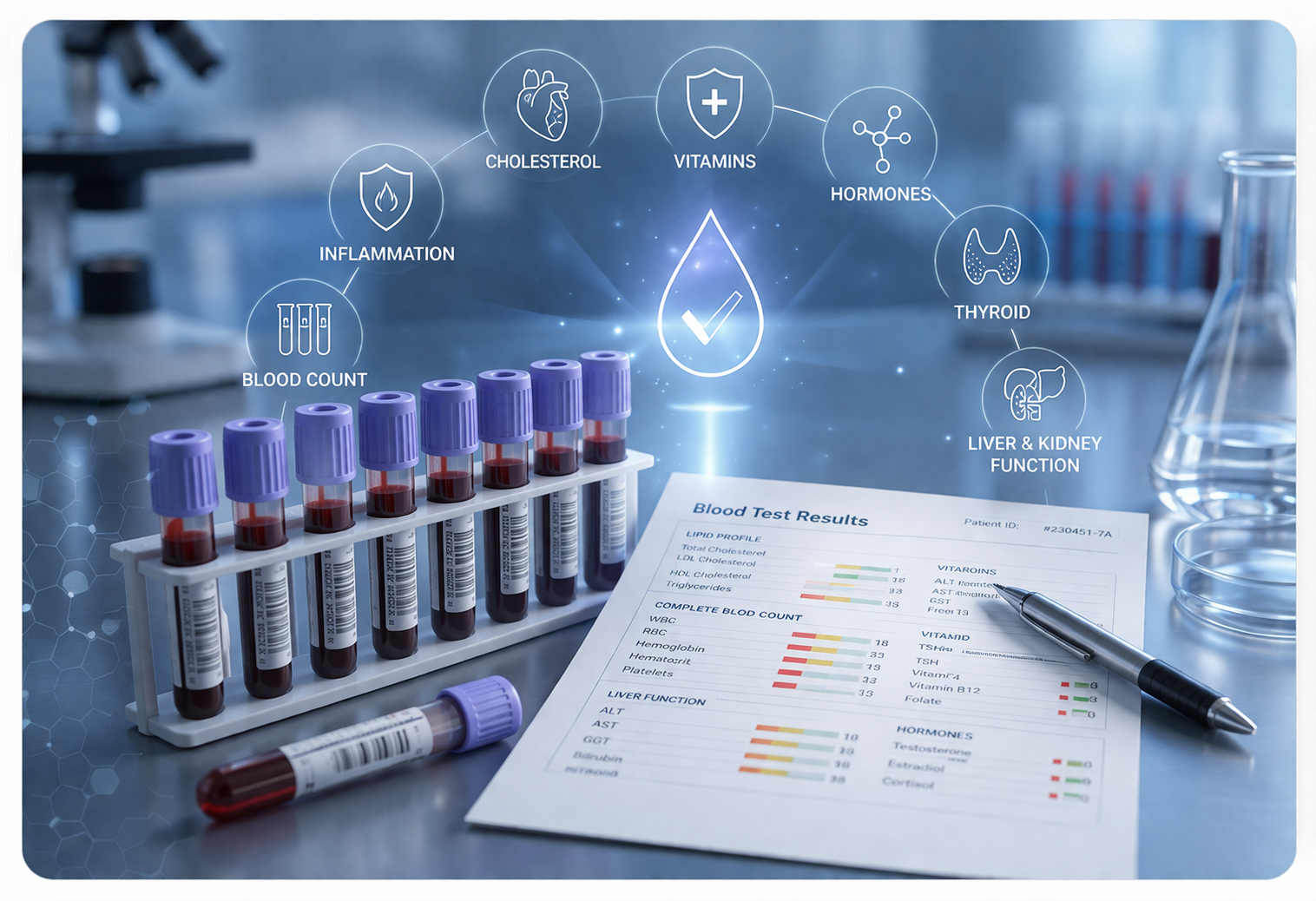
What can a blood test check for? A blood test can measure cholesterol levels, vitamin deficiencies, hormone balance, thyroid function, liver and kidney health, inflammation markers, and overall blood count.
These markers help build a detailed picture of your health, allowing you to identify deficiencies, monitor long-term conditions, and track changes over time.
Blood tests provide valuable insight into many areas of health, but the value of a test depends on what is being measured, why it is being measured, and how the result is interpreted in context. Some blood tests are used to investigate symptoms, while others are used for routine monitoring, baseline screening, or proactive health tracking.
On this page
What this guide covers
Blood tests can measure far more than one or two isolated markers
From cholesterol and vitamins to hormones, liver function and blood count, the right panel can help build a much clearer picture of your health.
Introduction
One of the most useful things about blood testing is that it can provide information across many different parts of the body. A single blood test panel may include markers linked to metabolism, cardiovascular health, inflammation, hormones, nutritional status, liver function, kidney function and more.
That does not mean every test checks everything. Different panels are designed for different purposes. Some are broad and general, while others are more targeted. The right choice depends on your symptoms, your health goals and what question you are actually trying to answer.
If you are still deciding which type of panel makes sense, it can also help to read how to choose the right blood test and how often you should get blood tests.
General health markers
Many broad blood test panels include markers used to build a general picture of health. These can include blood count, liver markers, kidney markers, glucose-related markers and proteins involved in wider metabolic or systemic review.
Blood count
Can help assess components such as red blood cells, haemoglobin, white blood cells and platelets.
Liver and kidney markers
Often used to review organ-related markers that form part of broader health screening and monitoring.
Glucose-related markers
Can contribute to understanding blood sugar patterns and metabolic health in the right context.
These broader markers are often useful for baseline screening because they provide a wider overview rather than focusing on one narrow area alone.
Cholesterol and lipid markers
Blood tests are commonly used to assess cholesterol and broader lipid markers. These are often included in general health panels because they are relevant to cardiovascular risk review and longer-term health tracking.
Total cholesterol and lipid profile
Useful for reviewing the broader pattern of blood fats rather than relying on one single number alone.
Monitoring over time
Lipid testing can be useful when tracking lifestyle changes, weight loss, diet changes or follow-up after earlier results.
This is one reason lipid markers are commonly repeated over time rather than looked at as a one-off isolated result.
Vitamins, iron and nutritional markers
Blood tests can also be used to assess parts of nutritional status. Depending on the panel, that may include vitamin markers, iron-related markers or other nutrients relevant to energy, recovery and overall wellbeing.
These tests are often used when someone has symptoms such as fatigue, poor recovery, low energy or suspected deficiency, but they are also used in proactive health checks where there is a specific reason to include them.
- Vitamin D
- Vitamin B12
- Iron and related markers
- Other selected nutritional biomarkers depending on the panel
These markers are most useful when they are chosen for a reason, rather than added at random without any clinical or practical purpose.
Thyroid function markers
Blood tests are commonly used to check thyroid-related markers. These can help assess whether thyroid function may be contributing to symptoms such as fatigue, low mood, poor concentration, weight changes or broader wellbeing concerns.
Thyroid testing is often included in more comprehensive health panels or selected specifically when symptoms suggest it may be relevant.
This is one example of why blood testing is not only about one disease or one diagnosis. It is often about identifying which systems are worth looking at more closely.
Hormones and hormone-related blood tests
Hormone testing is one of the most common reasons people seek private blood tests. Depending on the panel, blood tests may be used to assess testosterone, oestradiol, SHBG and other hormone-related markers relevant to men’s health, women’s health, recovery, libido and broader wellbeing.
Hormone blood tests are often most useful when symptoms are present or when the goal is to monitor an existing treatment plan. Timing matters here too, because some hormones are best measured at specific points in the day.
Hormone tests may be useful when
You are investigating issues such as low energy, reduced libido, poor recovery, mood changes or broader hormone-related symptoms.
Hormone tests are also useful when
You are reviewing progress over time or monitoring treatment, including hormone optimisation or TRT follow-up.
If you want a more detailed explanation of the numbers that appear in these reports, it may help to read what blood test biomarkers mean.
Inflammation and immune-related markers
Some blood tests also include markers linked to inflammation or broader immune-related activity. These are usually interpreted as part of a wider clinical picture rather than in isolation.
In practical terms, these markers may be used in broader health panels where the aim is to review overall wellbeing, investigate symptoms or monitor change over time.
They can be useful, but they are rarely meaningful without context. That is true of many blood test markers, not just inflammatory ones.
The value of a blood test often comes from how the markers work together, not from one result in isolation
A broader panel can be useful because it helps show patterns across different parts of health, rather than relying on one number without context.

What blood tests cannot do on their own
Blood tests can provide useful insight, but they do not replace clinical judgement, symptom history or wider medical assessment. A result may suggest that something needs further review, but it does not automatically explain every symptom or give a complete diagnosis on its own.
This is particularly important when symptoms are persistent, worsening or difficult to interpret. In those situations, blood testing can be part of the picture, but it should not be treated as the whole picture.
Final thoughts
Blood tests can check far more than a single marker. Depending on the panel, they may help assess blood count, cholesterol, vitamins, thyroid markers, hormones, inflammation and broader organ-related health indicators.
The real value comes from choosing the right panel for the right reason and understanding how the results fit together. A useful blood test is not just about what can be measured. It is about whether the markers being measured are relevant to your symptoms, your goals and the next step you may need to take.
Helpful Information
Frequently Asked Questions
Learn more about what blood tests can measure, including cholesterol, vitamins, hormones, thyroid markers and broader health indicators.
Can a blood test check cholesterol?
Yes. Blood tests are commonly used to assess cholesterol and broader lipid markers as part of cardiovascular and general health review.
Can a blood test show vitamin deficiencies?
Blood tests can assess a range of vitamin and nutritional markers, depending on which panel is chosen and why the test is being done.
Can blood tests check hormones?
Yes. Hormone blood tests can be used to assess markers such as testosterone and other hormone-related biomarkers where clinically appropriate.
Can a blood test check thyroid function?
Yes. Thyroid-related markers are commonly included in targeted testing and broader health panels where symptoms or health goals make them relevant.
Can one blood test check everything?
No single blood test checks absolutely everything. Different panels look at different groups of markers depending on the purpose of the test.
Do blood tests give a diagnosis on their own?
Not usually. Blood tests can provide useful information, but results normally need to be interpreted alongside symptoms, medical history and wider clinical context.